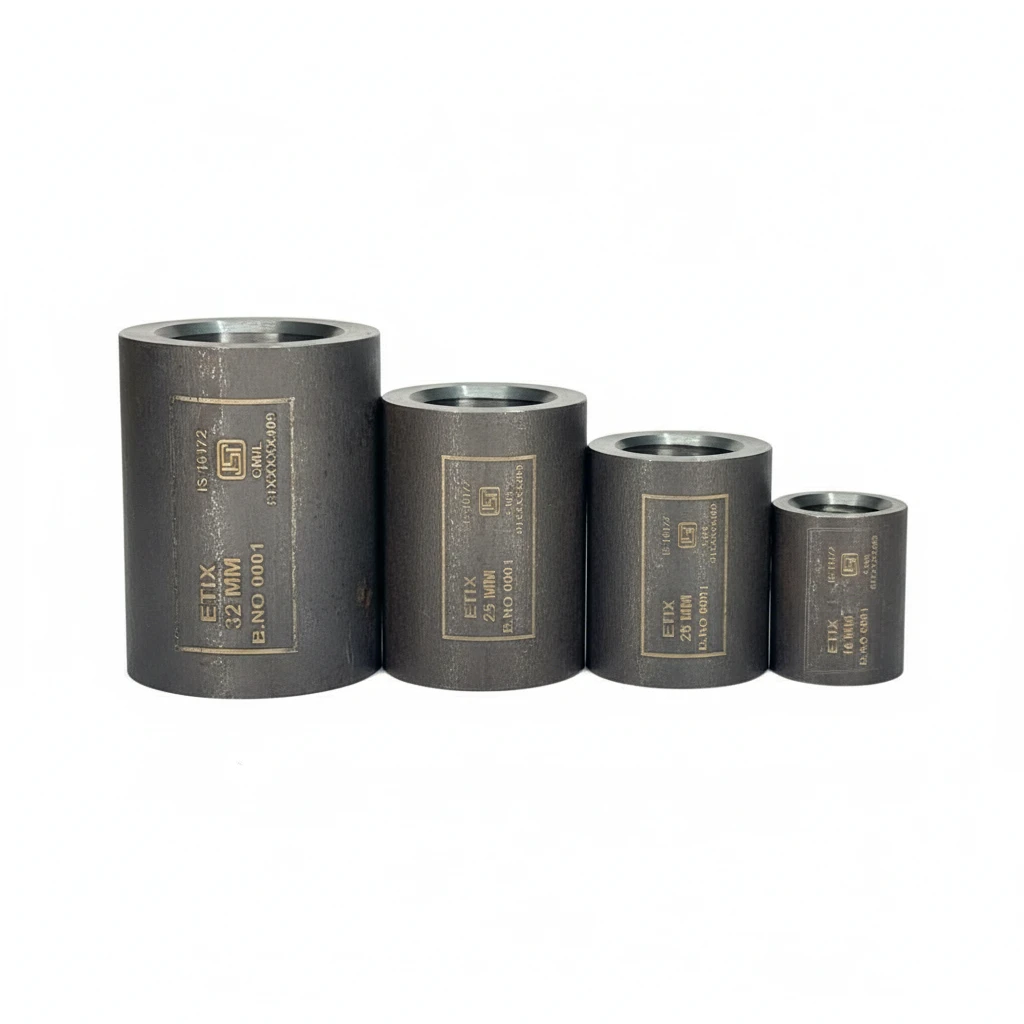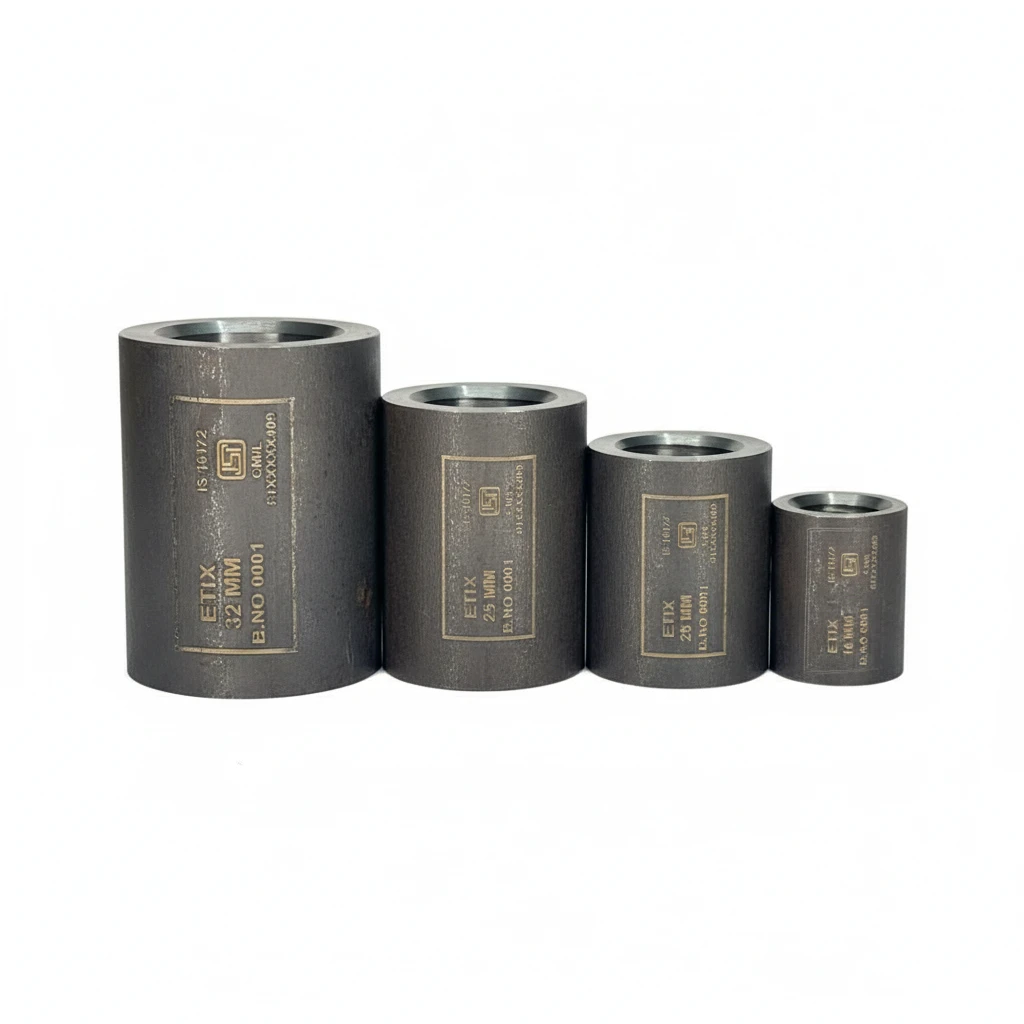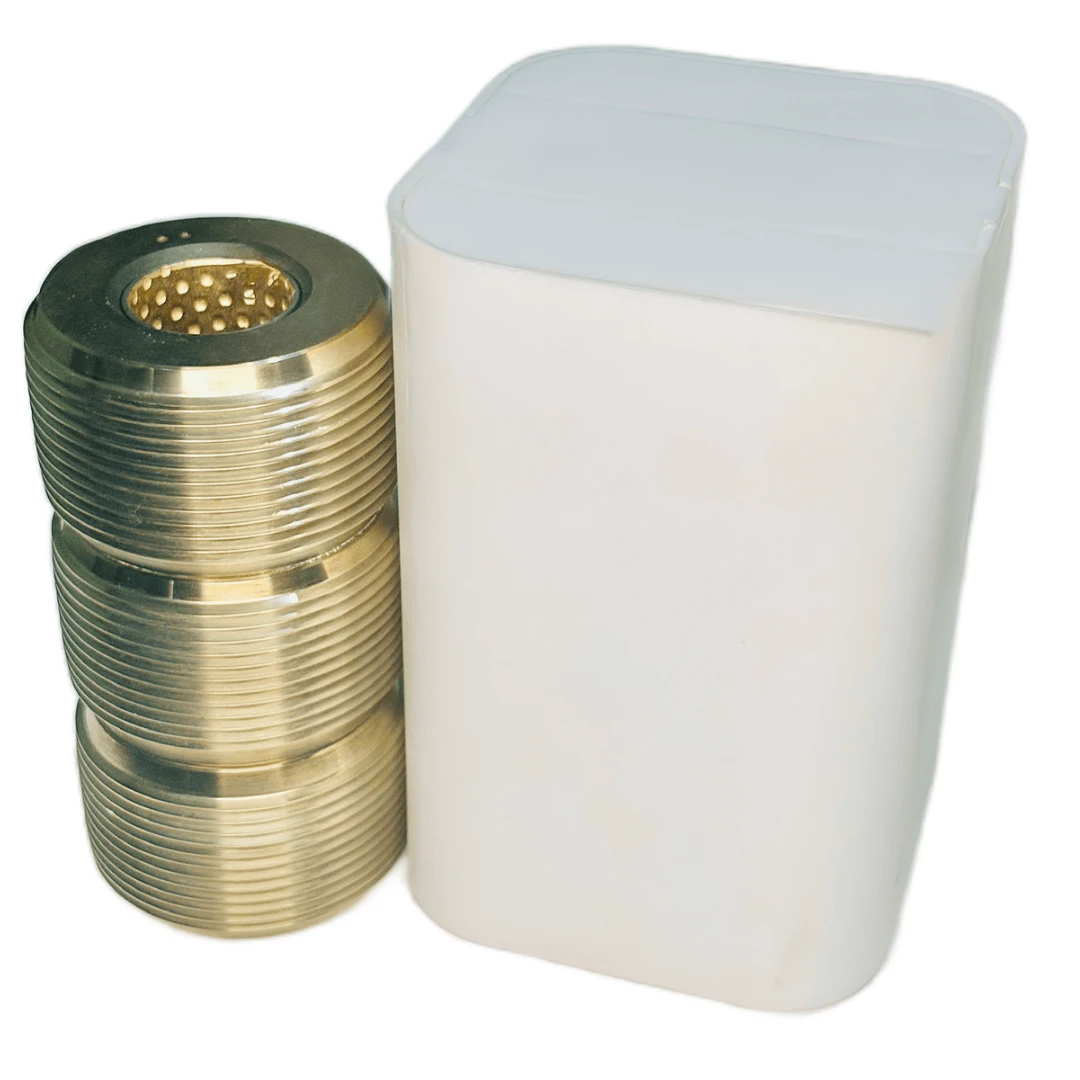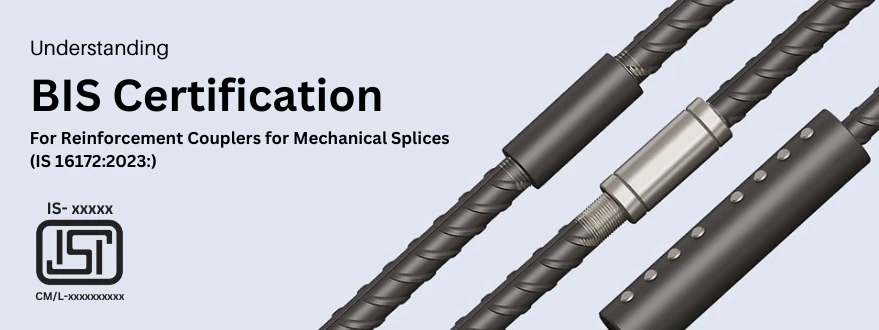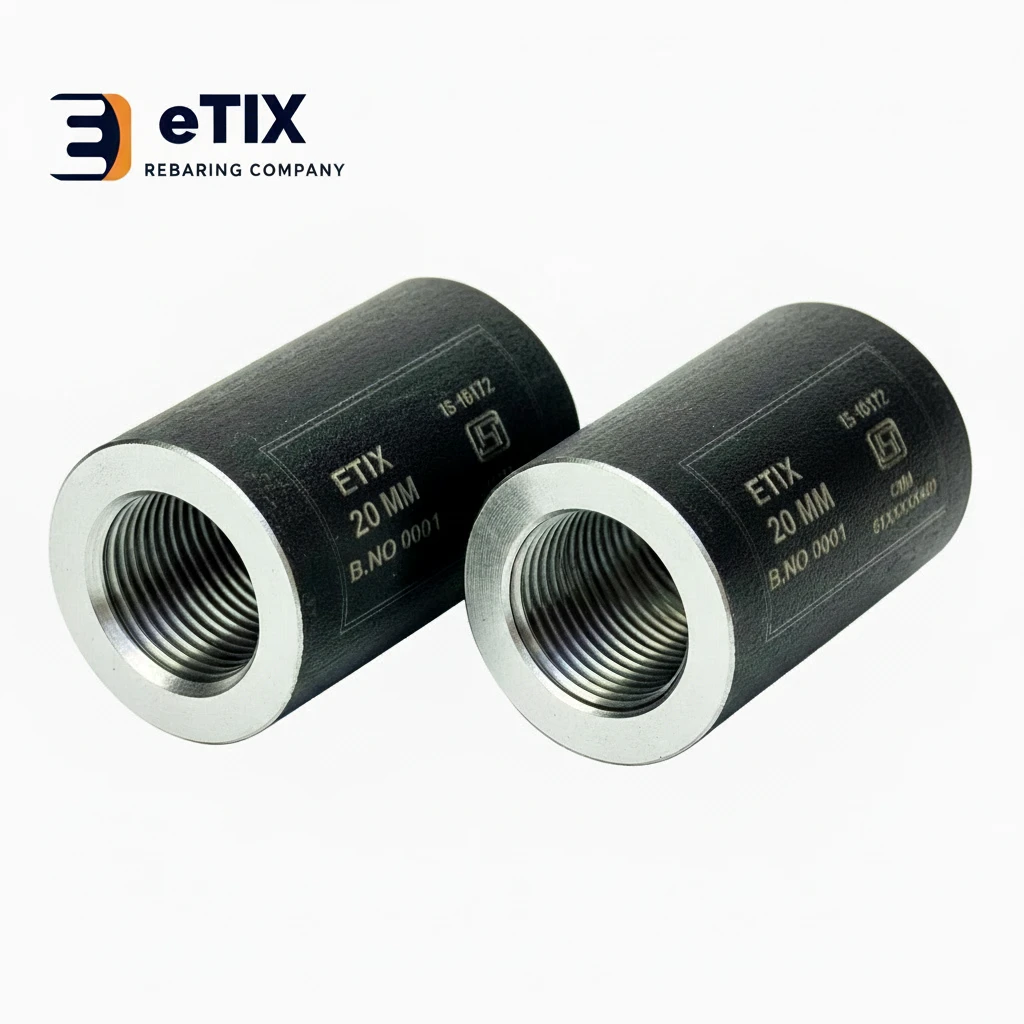
A TMT bar coupler (rebar coupler) is a mechanical device used to join two reinforcing bars end‑to‑end, creating a continuous load path without long lap lengths. These mechanical splices replace traditional lapping and welding, reducing steel wastage, improving concrete flow, and delivering more predictable structural performance in RCC members.
From a structural design perspective, mechanical splices are often grouped by how they carry loads:
Dowel bar mechanical splices form another category used to connect dowel bars between slabs, commonly in pavements and jointed concrete structures. Choosing the correct class is essential for code compliance and long‑term safety.
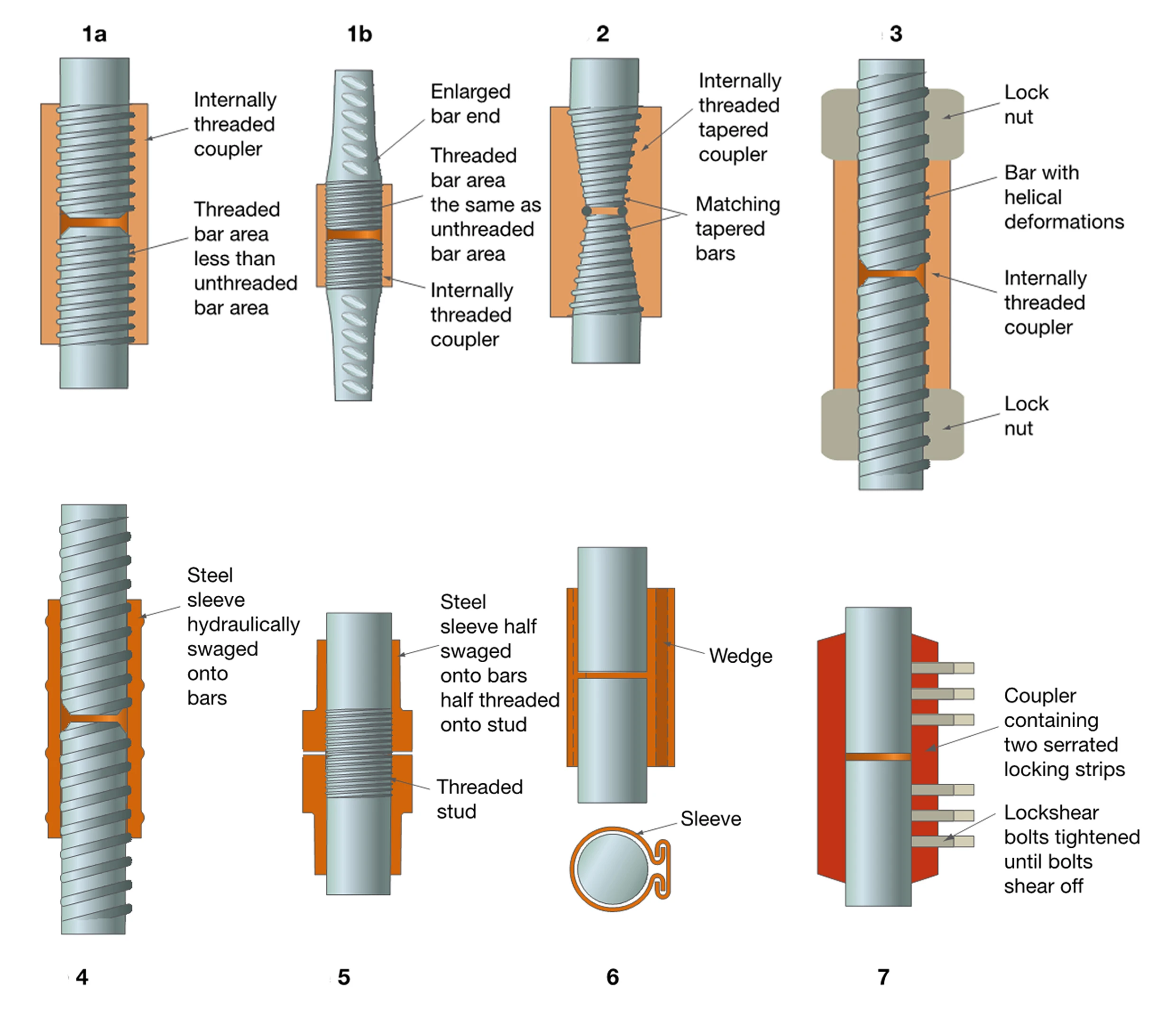
Threaded couplers are among the most widely used types, where bar ends are threaded to match internal coupler threads. Common variants include:
These systems can be supplied as standard (requiring bar rotation), positional (no rotation on one side), bridging (to span small gaps), or transition couplers for connecting different bar diameters. Threaded TMT bar couplers are common in high‑rise, bridge, and heavy infrastructure work because they reliably achieve bar‑break performance when properly designed and tested.
Roll‑thread rebar couplers are produced after the TMT bar ends are rolled in a threading machine, forming threads without cutting deeply into the bar core. This method preserves bar strength and provides a consistent threaded profile that mates precisely with the coupler sleeve, ensuring uniform load transfer.
Cold‑forged couplers follow a similar concept but add a forging step: the bar end is upset (thickened) using hydraulic pressure before threading. Forging slightly increases the bar diameter at the end, allowing a larger thread area and making the mechanical splice capable of matching or exceeding the original bar strength.
MBT (mechanically bolted) couplers are non‑threaded devices that use shear bolts to clamp onto plain bar ends, eliminating the need for threading. Each bolt is tightened to a specified torque so that toothed inserts grip the bar surface and transfer load through friction and bearing, making them ideal when existing bars cannot be rotated or machined.youtube
These couplers are frequently used in retrofitting, short projection bars, or congested zones where threading is impractical, and they can accommodate bars that are already cast into concrete. Because no bar rotation is needed, MBT couplers offer flexibility during on‑site adjustments but must be installed with strict torque control for consistent performance.
Non‑threaded crimping couplers were among the earlier mechanical splice solutions and do not use any threads on the bar or the sleeve. In this system, the coupler is slipped over the bar ends and then deformed (crimped) with a special press to grip the TMT bars mechanically, forming a continuous connection.
While simple and faster to install, crimping couplers rely heavily on correct equipment calibration and crimp pattern to achieve the desired strength level. They are generally more common in smaller projects or where high‑performance threaded systems are not required by design codes.
Selecting the right coupler type depends on bar diameter, structural demand, construction stage, and available equipment. Threaded and cold‑forged couplers are usually preferred where maximum strength, fatigue resistance, and code compliance are critical, such as in high‑rise cores and major infrastructure. MBT and other non‑threaded systems become attractive in repair, retrofitting, or constrained scenarios where threading or bar rotation is not feasible.
Across all types, verifying compliance with relevant standards for reinforcement couplers, checking manufacturer test data, and ensuring correct on‑site installation are essential to achieve true mechanical performance equivalent to continuous TMT bars.



You need to Sign in to view this feature

This address will be removed from this list
 english